What Is Cymatics? Visualizing Sound with Sand and Frequency
What Is Cymatics? Visualizing Sound with Sand and Frequency
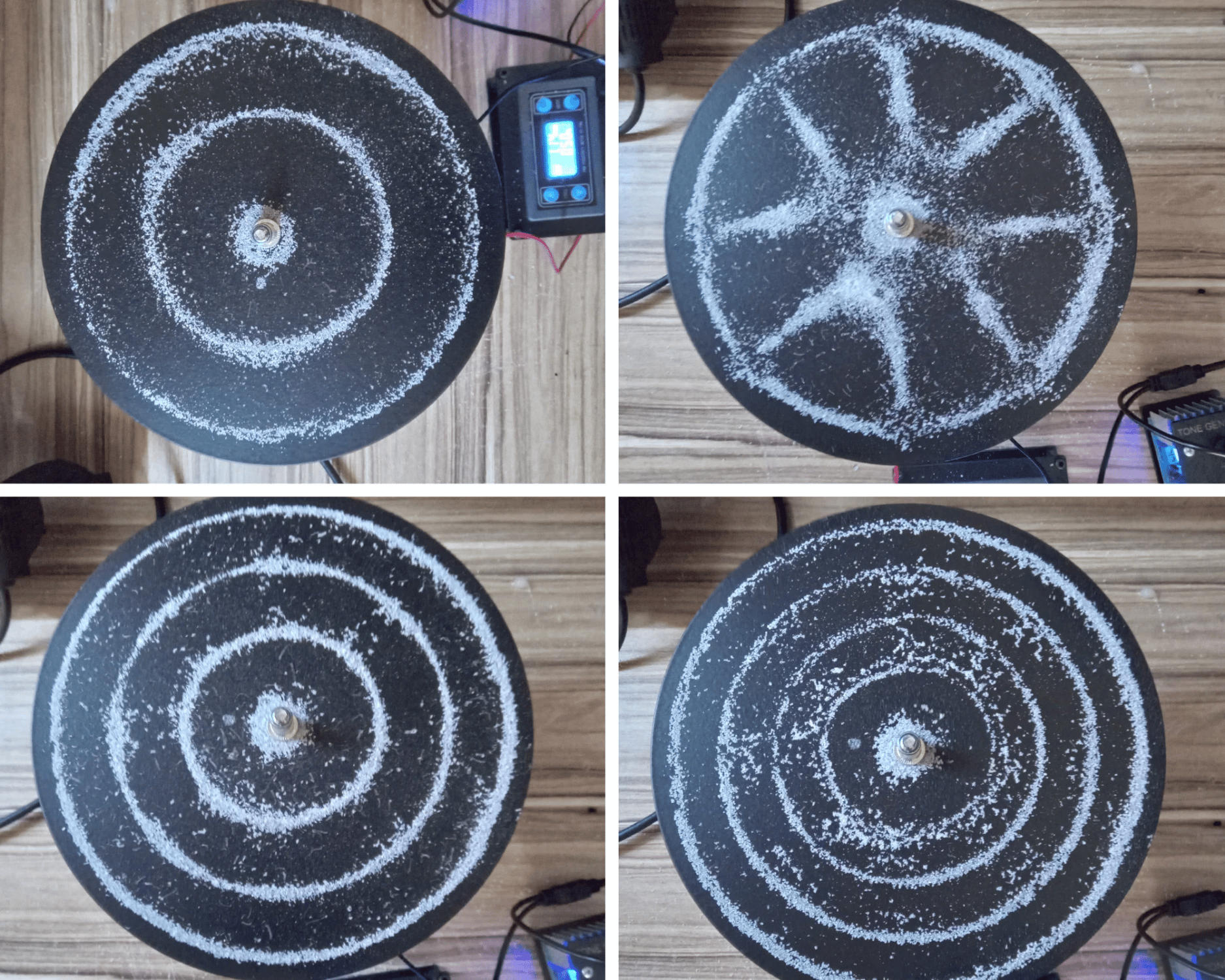
Have you ever wondered what sound looks like? Cymatics is the study of visible sound vibrations. When a surface vibrates at specific frequencies, particles such as sand move and organize themselves into beautiful geometric patterns. These patterns reveal the hidden structure of sound waves and demonstrate how frequency affects matter.
How Does Cymatics Work?
A cymatics experiment typically consists of a metal plate connected to a speaker or vibration source. Fine sand is spread across the surface of the plate. As different frequencies are played, the plate vibrates and the sand moves away from areas of strong motion, collecting along areas called nodal lines.
The result is a series of stunning patterns that change instantly as the frequency changes.
Why Do Different Frequencies Create Different Patterns?
Every object has natural resonant frequencies. When a sound matches one of these frequencies, the vibration becomes stronger and creates a unique standing wave pattern. The sand naturally gathers where there is minimal movement, making the invisible wave structure visible.
Higher frequencies often create more detailed and complex patterns, while lower frequencies produce simpler designs.
Educational Benefits of Cymatics
Cymatics is an excellent tool for STEM education because it combines several scientific concepts in a visual and engaging way:
- Understanding sound waves
- Learning about frequency and resonance
- Exploring wave behavior
- Connecting physics with art
- Encouraging hands-on experimentation
Students can immediately see how changing a frequency affects the resulting pattern, making abstract scientific concepts easier to understand.
Real-World Applications
The principles behind cymatics can be found in many areas of science and engineering, including:
- Acoustics and sound engineering
- Structural vibration analysis
- Musical instrument design
- Physics education
- Scientific visualization
Researchers use vibration patterns to study materials, improve designs, and better understand wave behavior.
Experience Cymatics Yourself
With a cymatics experiment kit, anyone can explore the fascinating relationship between sound and matter. By adjusting frequencies and observing the patterns formed by sand, students and hobbyists can gain a deeper understanding of how sound shapes the world around us.
Conclusion
Cymatics transforms sound into something we can see. Through the interaction of frequency, vibration, and matter, it reveals the hidden geometry of sound waves. Whether used in classrooms, laboratories, or at home, cymatics offers a unique and memorable way to explore the science of sound.